The autumn notebook / American Goldfinch
A season of
changing colors.
Look again at the familiar bird. Its colors may be telling you that the season is turning.
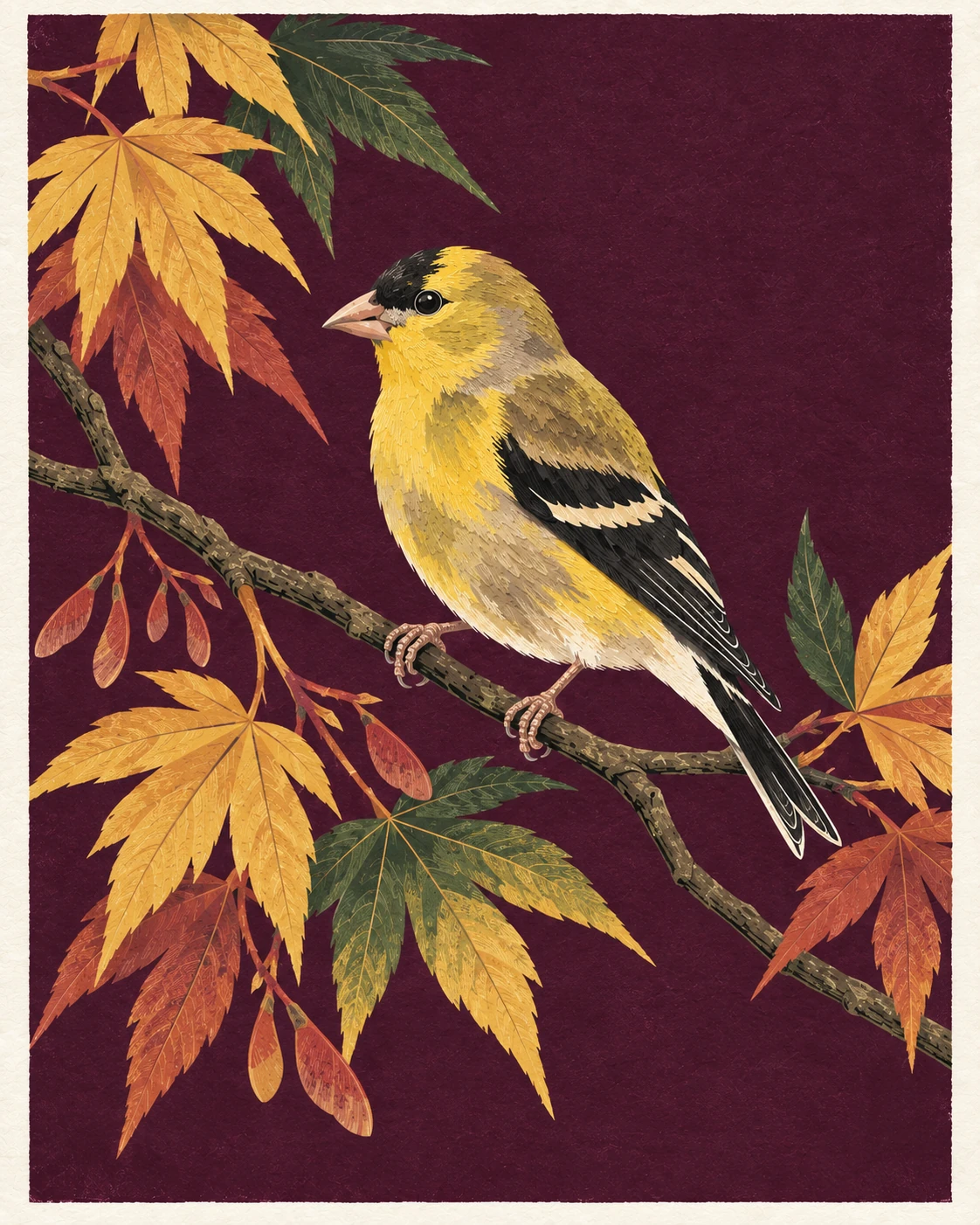
The American Goldfinch’s bright yellow summer look is only part of its story. Males in transition can show a patchwork of yellow and brownish plumage, with the dark wings and pale wing bars helping you recognize the bird. Cornell’s identification guide shows the differences.
A familiar bird, a changing coat
American Goldfinches molt their body feathers twice a year, including a molt in late summer. Molt replaces feathers; it is not simply an existing yellow feather fading to brown. Winter plumage is more subdued than a breeding male’s brilliant yellow. Cornell Lab of Ornithology.
Two kinds of seasonal change
The Japanese maple in this artwork is changing too. Its leaves can take on yellow, bronze, purple, or red fall color, depending on the cultivar. The tree changes and eventually sheds leaves; the bird replaces feathers. These are different processes, brought together here as an autumn scene. NC State Extension.
This illustrated autumn scene pairs the goldfinch with Japanese maple, an ornamental tree native to parts of East Asia. For habitat planting decisions here, begin with local native-plant guidance and the conditions in your own space.
A five-minute invitation
Return to a window or outdoor spot you know. Notice the bird’s shape, bill, wing markings, and behavior before relying on color alone. Write down one thing that has changed. You do not need to identify every visitor to begin paying attention.
When you are ready to act, explore the food web behind a planting decision or start with a choice available to renters.