Brand & communications case study
Birds. People.
A reason to care.
I built a conservation publication that turns curiosity about birds into a practical place to start.
Created and led by Elizabeth Carpenter
Independent project · September 2026 web edition
- The challenge
- Give nature-curious readers a useful first step, even with limited time, money, or outdoor space.
- My ownership
- Founder. Audience strategy, editorial writing, art direction, and digital publishing.
- Primary audience
- Millennial women with middle to upper-middle incomes, drawn to nature and manageable ways to give back.
- Edition & status
- September 2026 · Live publication.
Campaign extensions are self-directed concepts.
01 / The brief
Make conservation feel within reach.
Someone can care about birds without knowing what to plant, where to find a local walk, or how a conservation story relates to everyday life. The communication challenge is to turn that interest into a clear, manageable next step.
I built the publication around a simple editorial promise: an engaging story, evidence readers can trace, and an action that fits their circumstances.
My working audience insight: wanting to help does not always come with spare time, money, or a garden. I translated that into free resources, clear time commitments, and options for renters as well as homeowners.
02 / Strategic choices
Meet the audience persona & explore the brand system ↗
One brand. Different ways in.
Lead with place.
Coastal Maine and the DMV give broad conservation themes a familiar setting. The research stays tied to the location and species it actually studied.
Lower the barrier.
Renter-focused stories and questions about access make room for readers without a garden, specialist equipment, or prior birding experience.
Give each channel a job.
Social creative invites attention. Articles explain. The seasonal letter reconnects the themes. The field guide gives readers something useful to keep.
03 / Selected work
See the thinking
in the work.
Start with the feature, seasonal newsletter, and complete field guide. Then explore the supporting work.
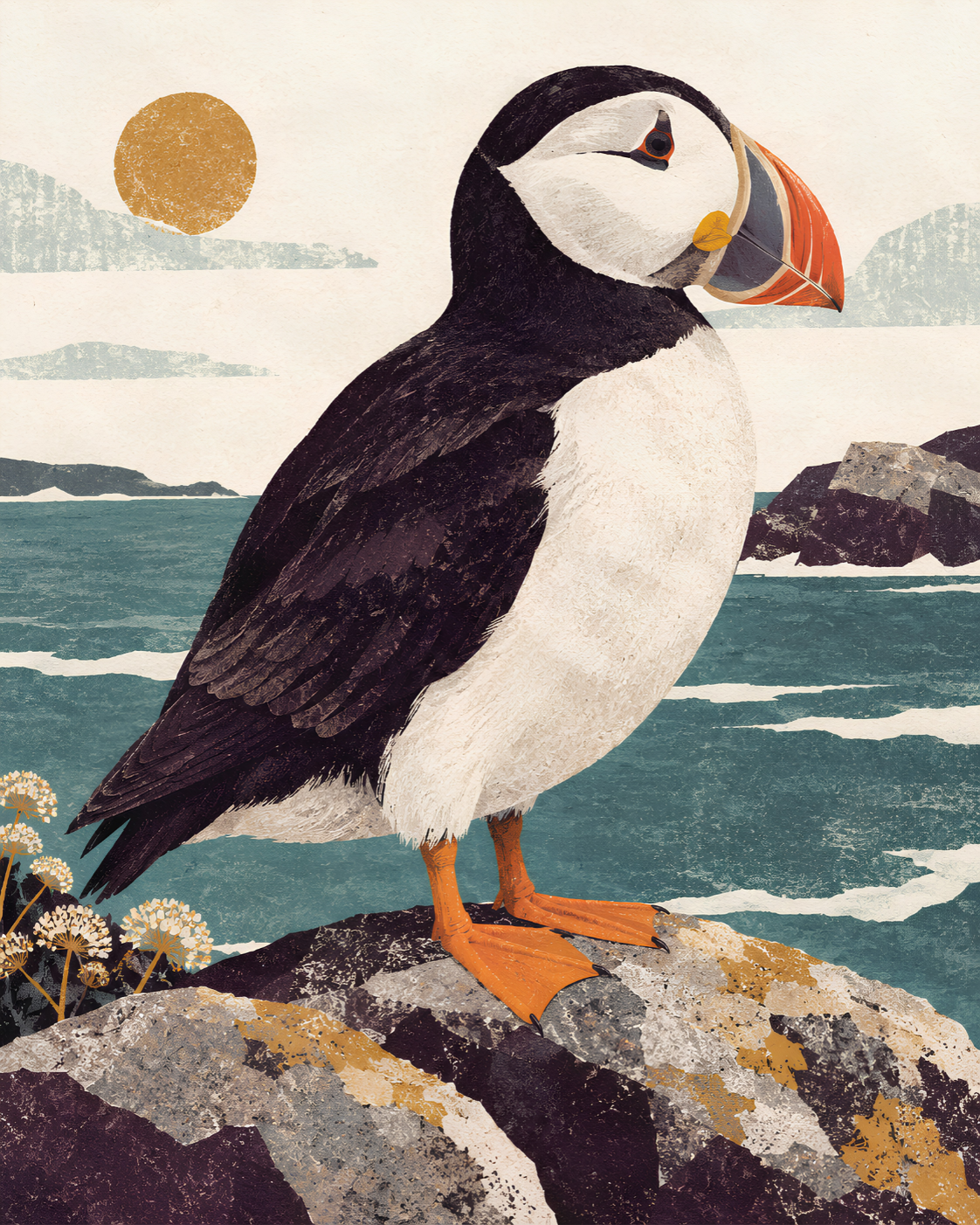
A small island.
A remarkable return.
I connected my Maine boat trip with the history of puffin restoration, combining a personal opening, research, photography, and video.
Read the feature ↗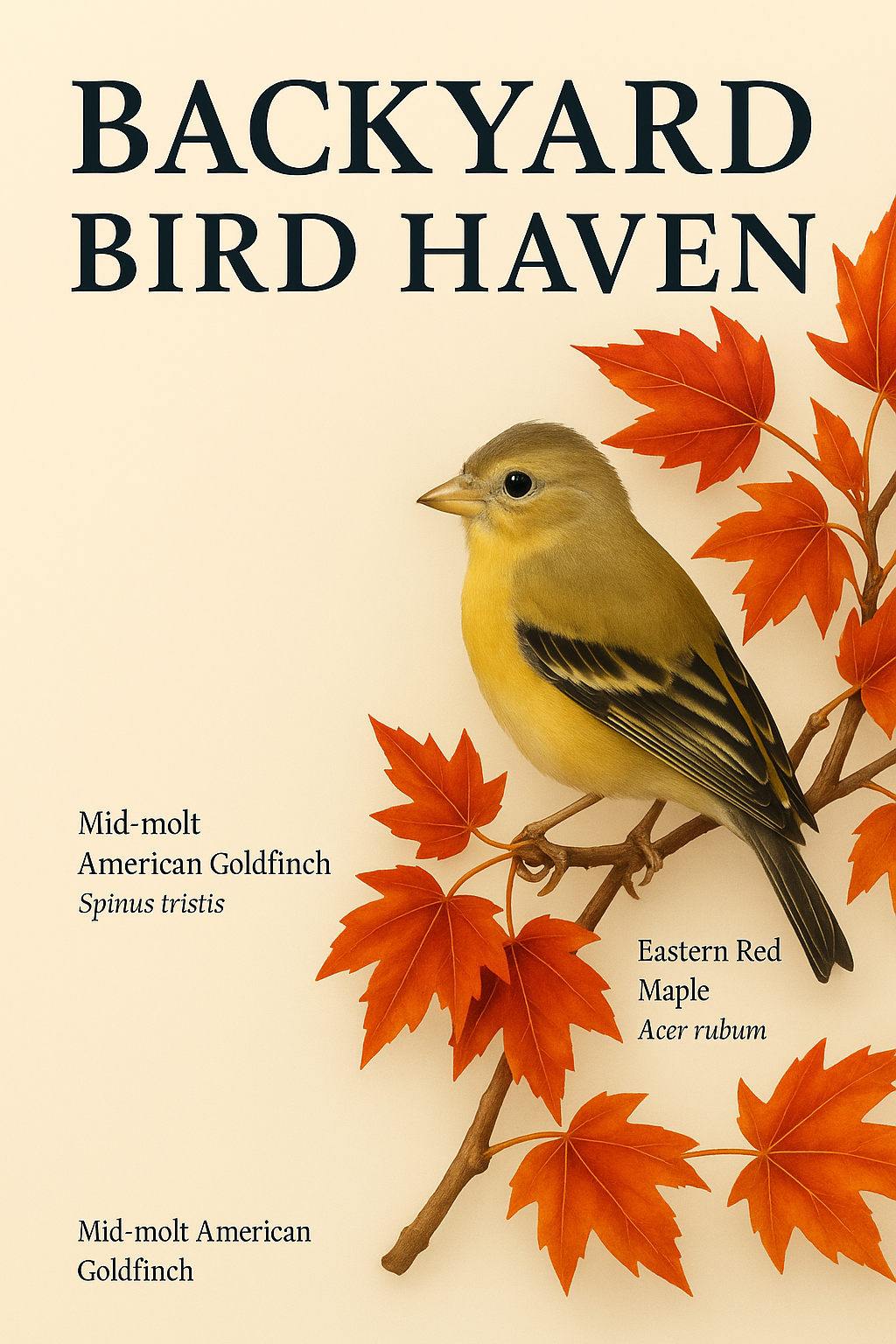
The Autumn Letter
I shaped two regional stories and one reader invitation into a cohesive seasonal web newsletter.
Open the web newsletter ↗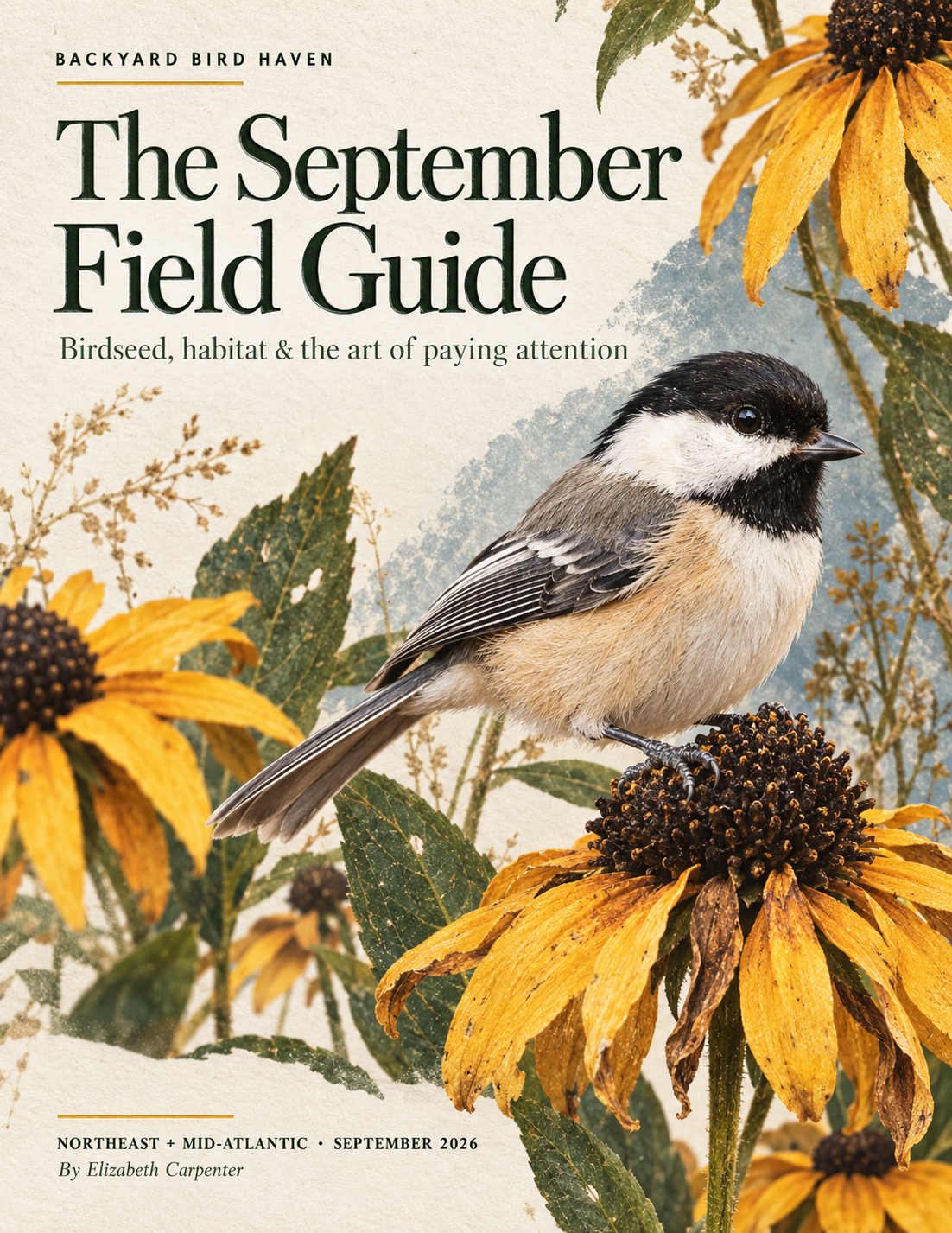
A useful reason to return.
I created an eleven-page resource with regional prompts, a 30-day plan, and an observation journal. Read the full portfolio copy without an email.
Read the complete guide · PDF ↗You don’t need to own a backyard.
I developed practical conservation messaging for readers who rent or have no outdoor space.
Read the renter’s story ↗Field notes, in motion.
I organized the social identity around four recurring themes: Bird ID, Bird Truths, Migration, and Your Yard.
View social creative & video ↗The food web next door.
I translated a Washington-area chickadee study into a clear, locally relevant planting story.
Read the research explainer ↗04 / Creative direction
Beauty earns attention.
Clarity earns trust.
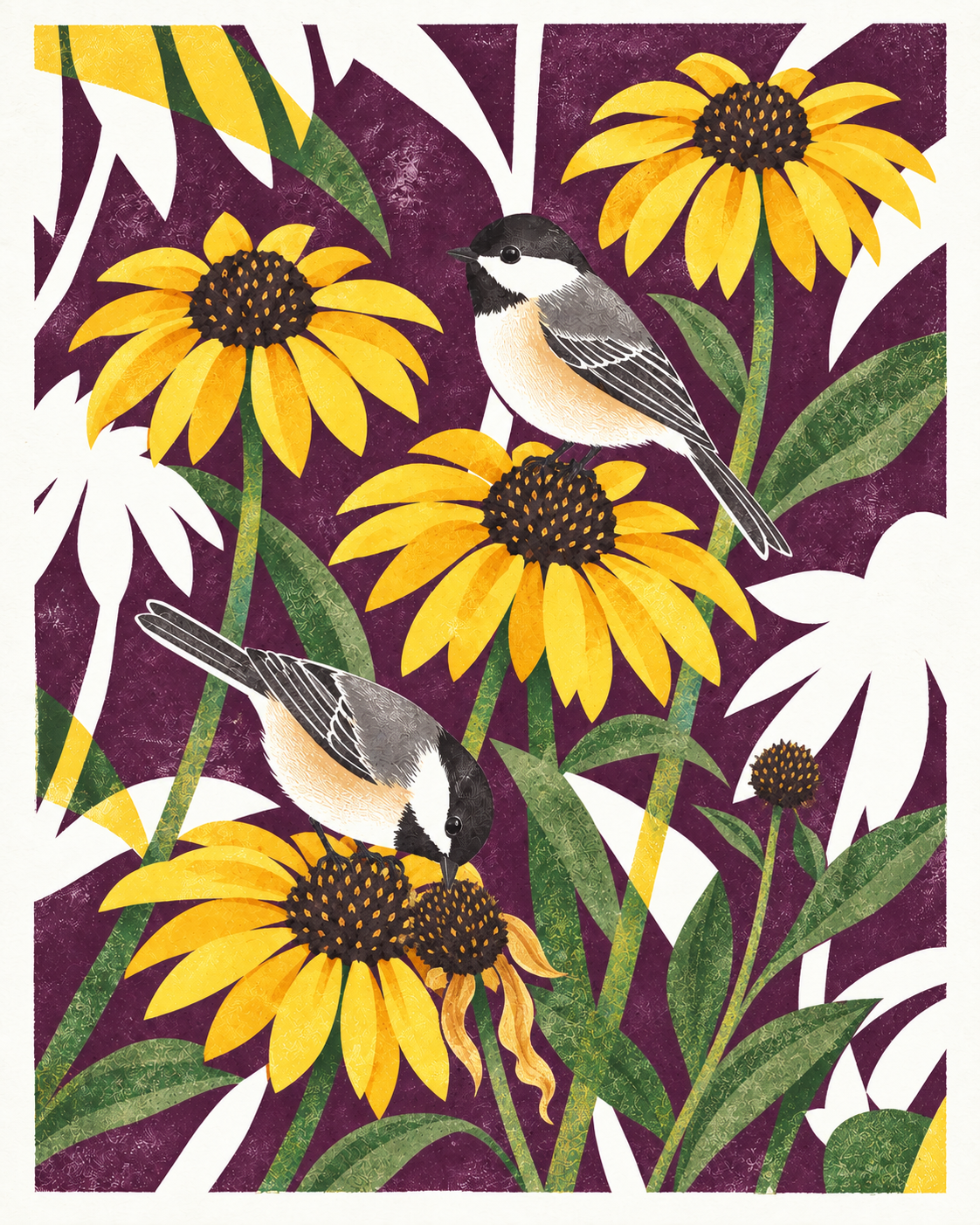
Plum, forest green, and golden yellow give the publication a distinctive identity. Print-inspired bird artwork and editorial typography create continuity across the website, social creative, and guide.
Short introductions, descriptive links, and a clear next step help readers move through the work. Original field photographs and footage are identified separately from illustrative artwork.
Ecological claims link to sources. Personal observations, editorial recommendations, and research findings have distinct roles. Review the editorial approach and references.
05 / Campaign extension · Self-directed concept
Save Space, Save Song.
A proposed campaign connecting habitat protection to the places people already know.
From strategy to a launch plan.
Audience messages, a four-frame social storyboard, a reader email, a community outreach draft, and a four-week rollout.
Open the campaign kit ↗The message
Start close to home. Understand what birds need. Choose one action you can sustain.
The concept adapts to each audience: a planting question for homeowners, a lighting conversation for renters, or an invitation to a local conservation group.
Sample leadership message
“Our invitation starts with a familiar place and a question: what could make it better for birds? We can help people understand the evidence, find a practical next step, and connect with others doing the work.”
Sample leadership copy · Independent campaign concept.
06 / Evaluation & next steps
What I built.
What I’ll measure next.
A complete editorial experience, with a consistent identity from the first story to the resource readers keep.
- Selected work samples
- 6
- Field guide pages
- 11
- Regional perspectives
- 2
- Recurring social themes
- 4
Scope of the September 2026 edition. Audience results will be reported separately, with source data and reporting dates.
| Question | Measure | Decision it informs |
|---|---|---|
| Which stories bring readers closer? | Engaged article visits and clicks to related content | Which topics and regional stories to develop next |
| Does the guide offer clear value? | Completed requests divided by guide-page visits | Whether the offer and form need refinement |
| Do readers want to hear more? | Separate newsletter opt-ins among guide requests | Interest in a future permission-based email program |
| Does interest lead beyond the site? | Outbound clicks to local chapter resources | Whether action prompts are useful; clicks alone do not prove participation |
Next I’ll establish a dated baseline, collect the first 30 days of comparable data, and use reader feedback to choose one improvement. The guide request form is live; site-wide engagement tracking and automated email delivery are planned.
Elizabeth Carpenter / Strategy through execution
Thoughtful strategy.
Work you can explore.
For more examples of my marketing and communications work, visit my professional portfolio.
View Elizabeth’s portfolio ↗Return to Backyard Bird Haven ↗Audience research / September 2026
Art earns the pause.
Usefulness earns the return.
This is a research-informed launch hypothesis, not an analysis of current followers. Instagram Insights, audience interviews, and post-level results were not available for this assessment.
Who to test first
Start with bird-curious women approximately 30–45 in the DMV and coastal Northeast, including renters and homeowners. Middle to upper-middle household income is a positioning assumption, not a verified trait of followers or a requirement to participate. Prioritize interest in illustration, gardening, everyday nature, and approachable conservation over income.
Pew Research Center’s 2025 U.S. survey found Instagram use among 55% of women and 44% of men. That supports testing a women-focused creative direction, but does not establish demand for this brand. Keep the welcome broad, with younger adults, men, and experienced birders as adjacent audiences.
Psychographic hypotheses to validate
Identity & belonging
“I care about nature, even if I am new to this.” Try gentle bird humor, recognizable everyday moments, and invitations that need no specialist knowledge. Watch shares and replies.
Agency & limited time
“Give me one useful thing I can actually do.” Try a single action, a realistic time commitment, and an option that costs nothing. Watch saves and visits to practical guides.
Beauty & discovery
“I want my feed to feel more interesting.” Try collectible bird portraits, a surprising sourced detail, and a consistent visual signature. Watch likes per reach and profile visits.
These motivations are proposed creative tests, not psychological diagnoses or characteristics established by gender, age, or income. Ask readers what they came for, what they tried, and what they want next.
The editorial opportunity
Scientific bird guides answer identification questions; conservation organizations explain action; illustrated nature accounts offer visual pleasure. Backyard Bird Haven can connect those jobs: an appealing bird portrait, a dry opening line, a traceable fact, and one achievable next step. This is a positioning choice, not evidence that competitors leave the space empty.
Make the founder’s skills visible
Use journalism to verify each claim, marketing strategy to give each post one audience need, art direction to build a recognizable series, and project management to batch production. Analytics closes the loop: document what readers actually save, share, and act on.
A four-week creative test
Publish three feed posts per week if sustainable: one illustrated humor post, one practical carousel, and one short observational Reel using original footage. This cadence is a manageable experiment, not a platform requirement. Use Stories twice a week for a question, a process glimpse, or a response to a reader.
| Week | Illustration | Useful carousel | Original-footage Reel |
|---|---|---|---|
| 1 | Currently between plumages | Leave seed heads standing | Five minutes at the feeder |
| 2 | No acreage. Still invited. | The feeder closing shift | One visitor, three visible details |
| 3 | Your next meeting has feathers | One window to inspect | A familiar park, a closer look |
| 4 | Birdwatching, no agenda | One locally native plant | A month of small observations |
Start with the six curated captions and artworks. Additional carousel and Reel entries above are production briefs, not finished assets.
Design for the reason to share
- Likes: one memorable bird portrait and a line that rewards recognition.
- Shares: a thought that naturally brings a particular friend to mind. Use one relevant invitation, without guilt or engagement bait.
- Saves: a short checklist with enough detail to use later, plus a source and date.
- Trust: label humor and observation separately from evidence. Illustrations are interpretive, not diagnostic identification plates.
Keep the cream, forest green, plum, and gold palette. Use large editorial type, generous margins, one hook per cover, and accurate species details. Produce portrait feed artwork at 1080 × 1350 and full-screen video at 1080 × 1920 as practical production choices. Preview crops in Instagram, add meaningful alt text, and caption spoken video. Reuse original art and footage; credit and obtain permission for outside creative work.
Measure response, then adjust
After seven days, record reach, likes, shares, saves, profile visits, and follows where available. Compare likes ÷ reach, shares ÷ reach, and saves ÷ reach within the same format. For Reels, also inspect average watch time and completion where available. Track Instagram visits to the guide with a tagged link. Four weeks gives directional learning, not a reliable causal result.
Compare each format against its own median, not a universal “good engagement” benchmark. Repeat the strongest theme with a new example before calling it a winner. Change one major variable at a time. No creative treatment can guarantee likes or shares.
Research and reference set
- Pew: U.S. social media demographics, 2025 · survey evidence for channel selection.
- Cornell Lab: American Goldfinch · expert reference for seasonal plumage.
- Audubon: autumn yard care · practical habitat guidance.
- Cornell Lab: feeder care · practical hygiene guidance.
Scope: a focused desk-research and positioning assessment. No representative customer study, account analytics audit, competitor engagement benchmark, or claim about September 2026 algorithm weights is implied.